 Health Information
Must-check list before buying a pill cutter and pill splitter: The 5 most common pitfalls for beginners
summarize重點摘要
A pill cutter and pill splitter is not better just because it is more expensive; the 20-50 yuan range is enough for daily use. Focus on blade material and splitting precision, and do not buy one with a plastic blade—it cuts inaccurately and can easily send pills flying.
checklist文章重點
- 切药器刀片材质决定寿命和精度,304不锈钢是底线,20-50元区间性价比最高
- V型卡槽比平底卡槽切得更准,对剂量要求严格的人优先选带四分功能的款式
- 便携款的核心是密封性而非尺寸,带旋转锁扣或磁吸卡扣的设计才靠谱
- 可拆卸清洗是长期使用的关键,一体成型的切药器容易藏污纳垢影响精度
Many beginners only look at price and appearance when buying a pill cutter, only to find that it cuts inaccurately, pills crumble everywhere, and the blade dulls after just a few uses. This article helps you avoid pitfalls from five dimensions: blade material, splitting precision, portability, cleaning difficulty, and safety design, with recommendations divided into three tiers by budget. Suitable for people who need to adjust medication dosage, have difficulty swallowing, or travel frequently.
I've helped several friends pick out pill cutters and splitters, and I've noticed that beginners make basically the same mistakes every time. I'm writing this to save you some wasted money.
Pitfall 1: Only Looking at Price, Not Blade Material
This is the most common mistake. Many people think a pill cutter is just a plastic box with a blade—how different can a ten-yuan one be from a fifty-yuan one? Very different.
The cheap ones basically use thin stainless steel blades that start dulling after a dozen uses. When you try to cut a pill, it's not cutting—it's crushing. The pill flies off and you can't even find it. Worse, dull blades tend to shatter pills, turning a half-dose into a pile of powder with no way to control the dosage.
How to identify: Check if the product description mentions the blade material. 304 stainless steel is the minimum; 420 stainless steel or medical-grade stainless steel is better. If it just says "stainless steel" with no specifics, it's probably a cheap thin blade.
How to avoid: Before buying, scroll through buyer photos—especially follow-up reviews. Only reviews from people who've used it for a month or more are worth referencing. If multiple people report "cuts unevenly" or "pills shatter," skip it.
Price expectation: 20-50 yuan is a reasonable range. Below 15 yuan, blade and mold precision are basically unguaranteed. Above 80 yuan, the extra money goes to brand premium and packaging, with limited improvement in core function.
Pitfall 2: Ignoring Cutting Precision, Thinking "As Long As It Cuts"
Pill cutters, pill splitters, pill cutting tools, one-two-four splits, portable carry-on—the core value of these products is "precision." But many people only realize after buying that the two halves come out uneven, one big and one small, and the dosage is still wrong.
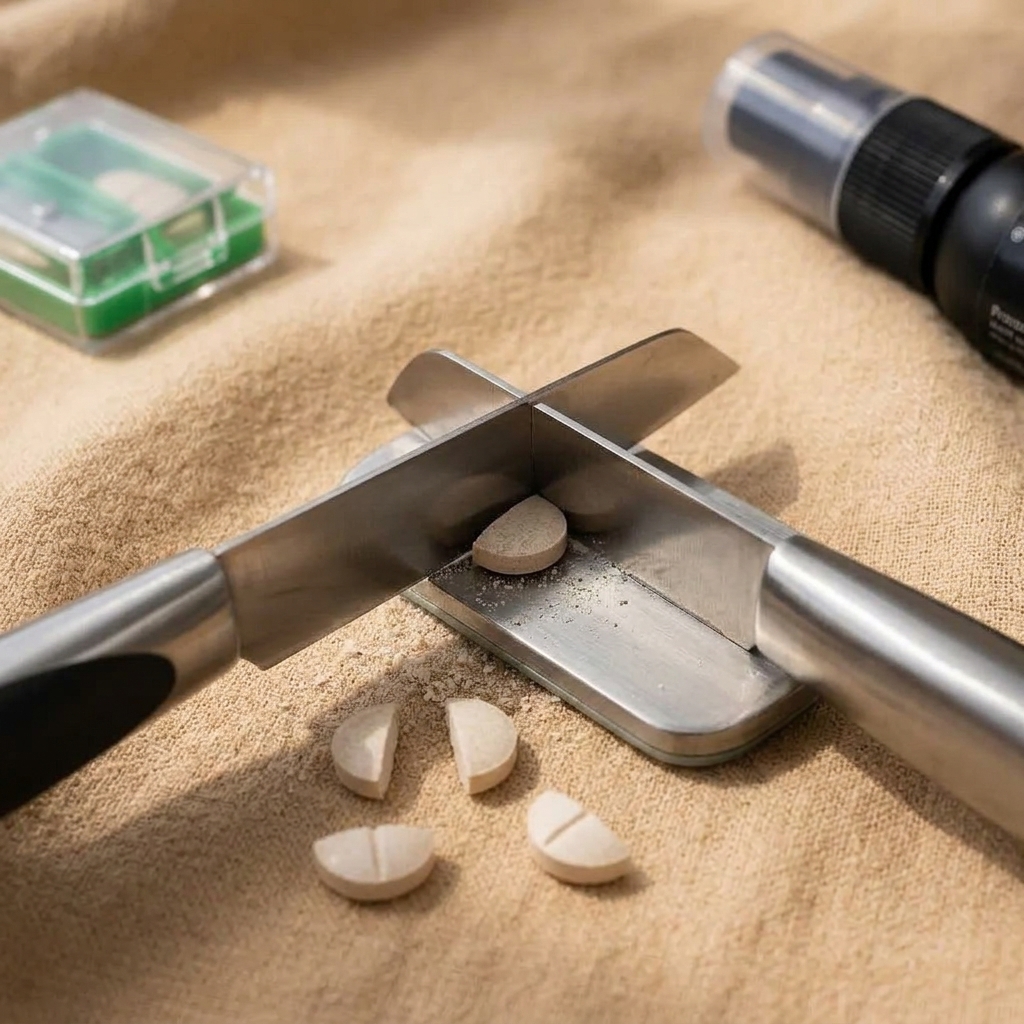
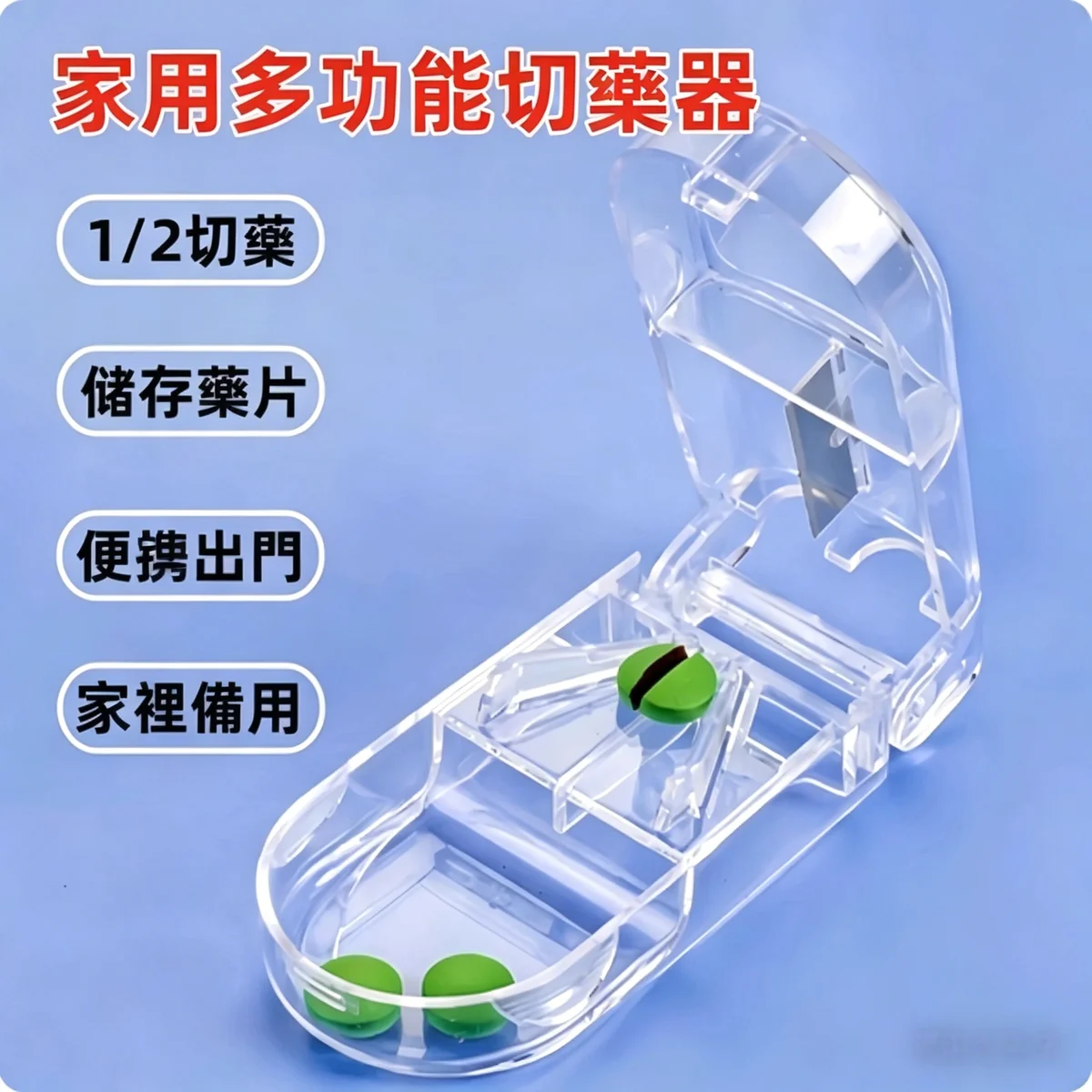
The problem is in the mold. A good pill cutter has a V-shaped or U-shaped pill slot that holds the pill firmly in place while the blade presses down vertically. A bad one has a flat slot where the pill wobbles, and the cut goes off-center.
How to identify: Look at the slot shape in product photos. V-shaped slots are far more precise than flat-bottomed ones. Also check if it has a "quarter split" function—being able to split into four means higher mold precision, so splitting in two will naturally be more accurate.
How to avoid: If you take medication with strict dosage requirements (like thyroid meds or blood thinners), don't cheap out. Buy one with a V-shaped slot and quarter-split function. Before cutting, place the pill in the slot to test if it sits securely.
Safety reminder: Wash and dry your hands before cutting. Wet hands make pills stick to the blade, and they'll fly off when you shake it. Clean up debris promptly after cutting, and keep it away from children.
Pitfall 3: Only Looking at Size for Portability, Not Seal Quality

Many people buy portable models based only on "how small is it," then discover that pill debris leaks through the gaps and their bag is full of powder.
The key to a portable pill cutter isn't how small it is—it's whether it seals properly when closed. Some designs use top and bottom covers that snap together, but they don't snap tight, and one squeeze in your bag pops them open. Good designs use a rotating lock or magnetic + snap dual fixation.
How to identify: Check if product photos show the closed state. If they only show it open, the seal is probably mediocre. Look for reviews mentioning "leaks powder" or "comes apart."
How to avoid: If you mainly use it at home, don't stress about portability—a desktop model is more stable. If you travel frequently, choose one with a lock. After closing, shake it hard a few times—if nothing leaks, it passes.
Price tiers:
Pitfall 4: Unreasonable Cleaning Design, Gunky After a Few Uses
Over time, pill powder accumulates in the blade and slot. If the structure is complex and can't be disassembled, you can't clean it properly. Over time, the powder clumps, affecting precision and breeding bacteria.
How to identify: Check if it can be disassembled. A good design has a blade assembly and slot that separate, so you can just rinse with water. A bad one is one-piece molded, only cleanable with cotton swabs that can't reach the corners.
How to avoid: Before buying, check if the product description mentions "detachable" or "washable." If not, think twice.
Safety reminder: Always air-dry after washing before use. The blade is sharp—use a cloth when wiping, don't use bare hands.
Pitfall 5: Ignoring Freebies and Accessories, Wasting Extra Money
Many shops include free gifts, but the quality varies wildly. For example, they include a carrying case that's bigger than the pill cutter itself—not portable at all. Or a cleaning brush with bristles so stiff they scratch the blade.
How to identify: Check if the freebie list includes practical small items. For example, a box of Long-lasting Condoms included randomly—though not sold separately, it saves you money. Or Green Knight Long-lasting Wipes—convenient for travel.
How to avoid: Don't order just for the freebies. Check the main product reviews first, then the freebies. If the freebie is something you won't use, it's as good as nothing.
For real experiences with freebies, check out My Honest Thoughts After Using the Personal Lubricant Freebie—there are some genuinely useful details in there.
Tiered Recommendations by Need
Tier 1: Fixed home use, budget 20-35 yuan
Choose a basic model, focus on blade material and slot shape. Don't worry about portability. Buy one with quarter-split function for higher precision.
Tier 2: Frequent travel, budget 35-60 yuan
Choose a portable model with a lock, prioritize seal quality. Blade should be 420 stainless steel or above, V-shaped slot. Size should fit in your palm.
Tier 3: Strict dosage requirements, budget 60-100 yuan
Choose medical-grade precision, detachable for cleaning, replaceable blade. These usually have brand backing and after-sales support.
If you're still unsure which to choose, you can reference Tested: Pirelli Long-lasting Wipes vs Spray—Which Is More Worth It—some of the comparison logic there can be applied here.
A Few Safety Details to Finish
The pill cutter itself isn't complicated, but using it wrong carries risks.
First, don't use it to cut extended-release or enteric-coated tablets. These have special coatings, and cutting them releases the full dose at once, which can cause overdose. Ask a pharmacist if you're unsure.
Second, replace the blade when it dulls. Don't make do—dull blades crush pills and give inaccurate doses.
Third, keep it out of children's reach. The blade is small but very sharp.
Fourth, wash your hands after cutting pills. Some pill powder on your hands can irritate your eyes if you rub them.
If you need precise dosage control, a pill cutter, pill splitter, pill cutting tool, one-two-four splits, portable carry-on is a necessity. But going through these five pitfalls before buying can save you a lot of trial-and-error costs.
help常見問題
Q1.What should I do if the pill cutter produces halves of different sizes?
First check whether the pill slot is V-shaped. Flat-bottomed slots tend to wobble and cause uneven cuts. If the slot is fine, the blade may be dull—try replacing it. Also, before cutting, place the pill in and make sure it sits securely, press down with your finger, and don't cut while it's hovering.
Q2.Can all pills be cut with a pill cutter?
No. Extended-release tablets, enteric-coated tablets, and capsules cannot be cut. Cutting an extended-release tablet can release the drug all at once, possibly causing overdose and poisoning. Cutting an enteric-coated tablet removes its protective layer and can harm the stomach. If you're not sure, ask a pharmacist—don't cut it yourself.
Q3.How do I solve the problem of pill powder leaking out when I put a portable pill cutter in my bag?
It means the seal isn't good enough. Choose a style with a rotating lock or magnetic snap closure, and after closing it, shake it hard a few times to test it. If you've already bought one, clean out the debris after cutting, then put it in a small sealed bag—don't just throw it in your bag.
Q4.How often should I replace the blade of a pill cutter?
It depends on how often you use it. If you cut once a day, a regular stainless steel blade usually starts to dull after about 1–2 months. 420 stainless steel can last 3–6 months. If the pill flies out or gets crushed when you cut it, it's time to replace it. A design with replaceable blades is more cost-effective than a one-piece design.
Q5.Is there a big difference between pill cutters costing tens of yuan and those costing over a hundred?
There isn't much difference in core function; the main differences are precision and durability. 20–50 yuan can meet daily needs, while 60–100 yuan models are usually better in mold precision, detachable cleaning, and replaceable blades. If the medication you take has strict dosage requirements, it's advisable to buy a more expensive one.
Q6.Can a pill cutter be washed with water?
It depends on the structure. Detachable ones can be rinsed with water, but they must be dried before use; a rusty blade will affect precision. One-piece molded ones can only be wiped with a cotton swab—don't soak the whole thing in water, because water in the crevices won't dry and can easily cause mold.